The problem with stage-gate
Stage-gate works when you know what you are building. New services rarely do. At the first gate, the customer, the price and sometimes the operating model are still guesses, and the process asks you to write them down as plans.
What we changed
With the PMO director, I co-owned a change to the framework: every project was filtered by how much was still unknown. Predictable projects kept the standard path. The uncertain ones, mostly new services, came into the NPI portfolio I ran.
The gates stayed. Next to them, each project ran discovery work: customer development and jobs-to-be-done interviews, a business model canvas, and small tests on the assumptions that would sink the project if they were wrong. The scope narrowed toward where the value was, or the project stopped before the large spend.
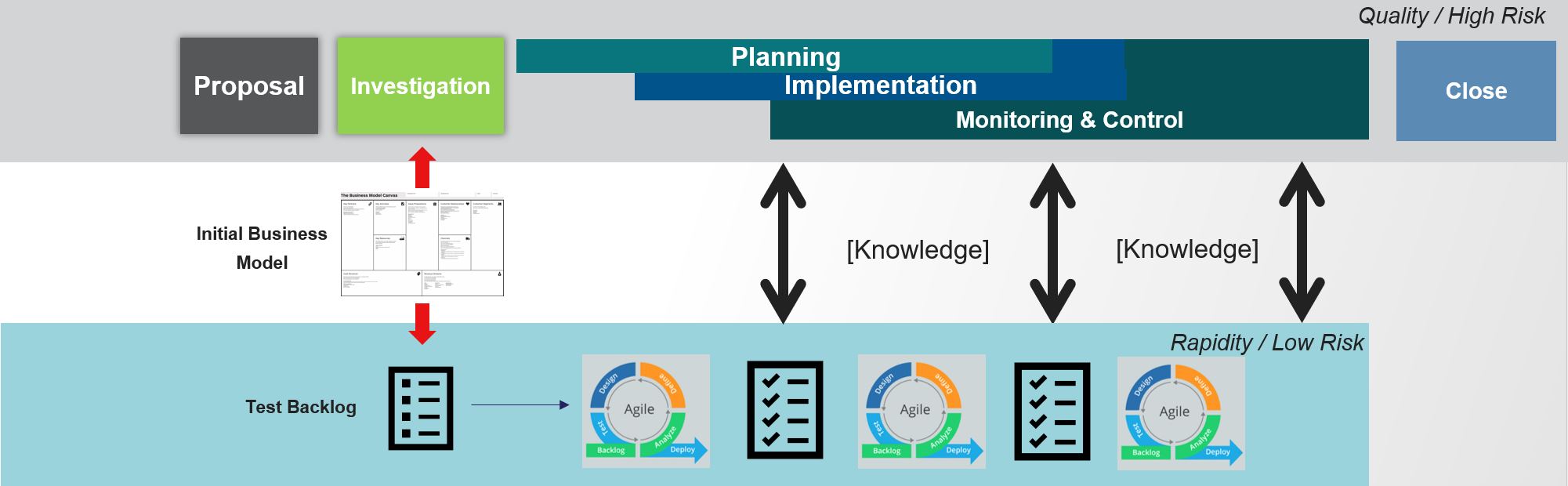
We put this in place with the product executives, so gate decisions were made on tested assumptions rather than forecasts.
The team
Five project managers ran the portfolio's projects. The employee engagement score was 88 out of 100.
What came out of it
Over four years the portfolio produced $70M of new revenue, and time to launch dropped by half. It included the adherence marketplace, just-in-time labeling, direct-to-patient (DTP) and the rental model.